
The Spreadsheet and the Muse
On ADHD, passive income and the generation nobody writes about

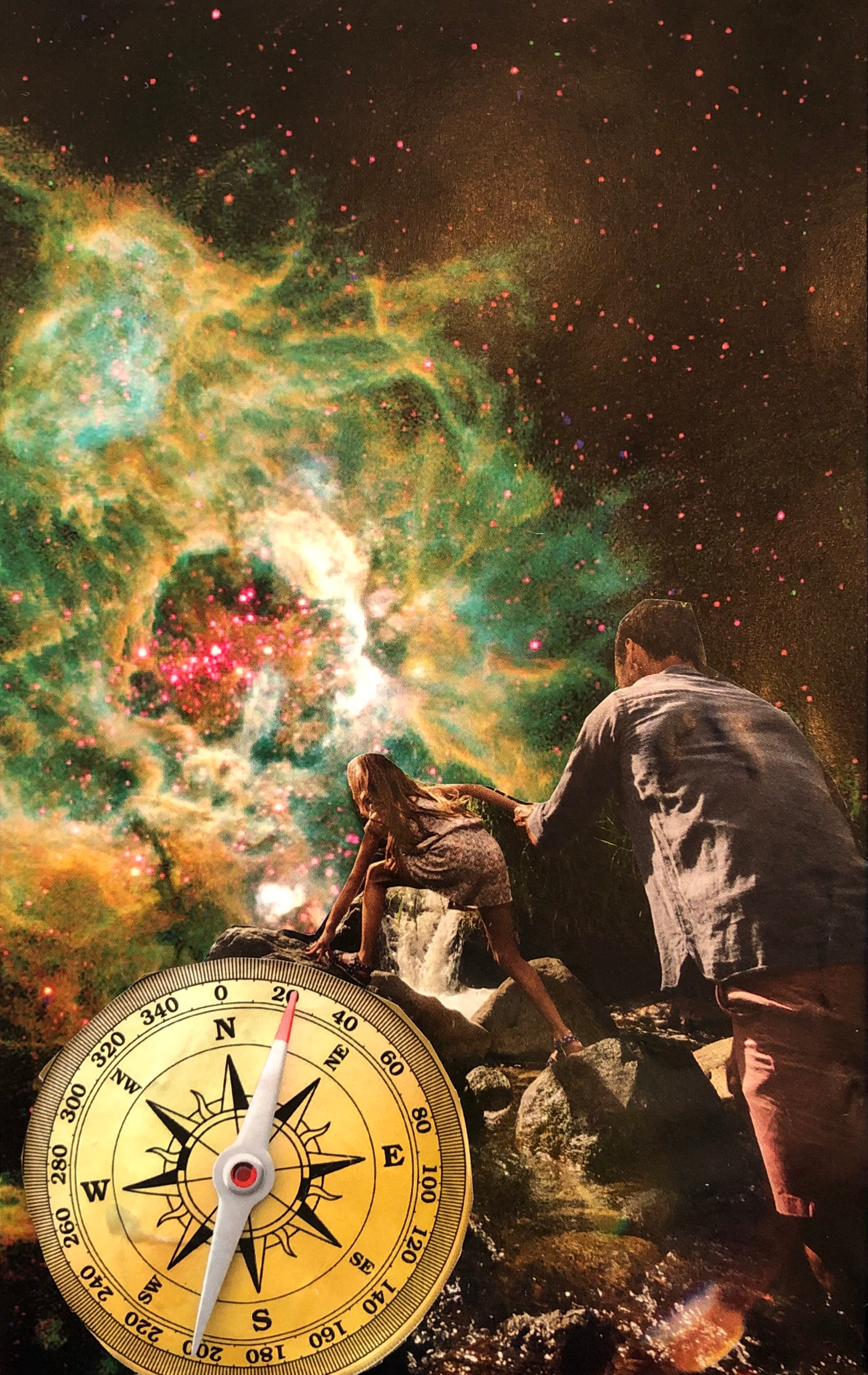
My brain is like a radio tower — picking up transmissions 24/7: Substack titles, tax receipts, the price of a carrot, lines from stories I have yet to write. Poems on one frequency. Spreadsheets on another. The muse and the math spar in the multiverse of my mind.
The intensity ramps up at night. My dreaming body bridges my waking body — an antenna between worlds.
The dimmed blue numbers on my digital clock read 3:30 AM. My journal is beside me. Two fountain pens. I could capture these messages if I turned on the light, but the light breaks the bridge. Instead, I create the ‘best of’: a hit list of transmissions, visualized as sticky notes, placed on my brain. Sometimes this works, unless the thoughts get overwritten by more downloads and more dreams.
What if I invested in a glow-in-the-dark pen? Another sticky note.
But first, back to sleep.
In my dream, I’m hunted by invisible assailants.
I came here to write — an old cabin by the sea. A wall of cedars behind me, the Pacific in front. I’m at my desk by candlelight when I sense their presence. How did they find me? I pinch the wick and blanket myself in darkness — my hearing sharp, bat-like — and crawl on my belly toward a hidden room under the stairs where a triangle-shaped window opens to the outside world.
Wrapped in cobwebs and dust, I peer into the night. Muffled voices. Footsteps on beach stones. Slow. Deliberate. The distinct metallic click of a gun at the ready. I want to escape my tiny cell. Make a break for the woods.
I’m afraid of being seen.
The morning light wakes me at 5:30 AM, bouncing off the house next door. The sun rises in the east, but I sleep with my head west, which means it sneaks up on me every time.
I pick up my pen and start journaling. That’s when the symbolism lands. The invisible assailants have names: taxes, rising costs, inflation.
The evening preceding, I was out for Indian food — the combination of spices a possible co-conspirator for my dreams. I’ve isolated cumin as a psychoactive agent of chaos. I have data points. I use it in moderation.
My dinner companions were my mother and our new friend Bill. She is 79, he is 80.
I met Bill at Elder College, where I volunteer supporting seniors with technology. Most of the time, this means managing smartphone anxiety — password resets, hacking paranoia, Apple’s insidious ‘more storage’ requests.
“I’m being left behind!” they say, panicked.
I understand the feeling of being left behind. Mine just comes with a different price tag.
Which is exactly why, when Bill invited us to dinner, I came prepared.
Bill doesn’t need my help. Retired IT director, computer science degree, gives workshops on AI. But I needed his.
I had a burning question I’d been carrying for weeks.
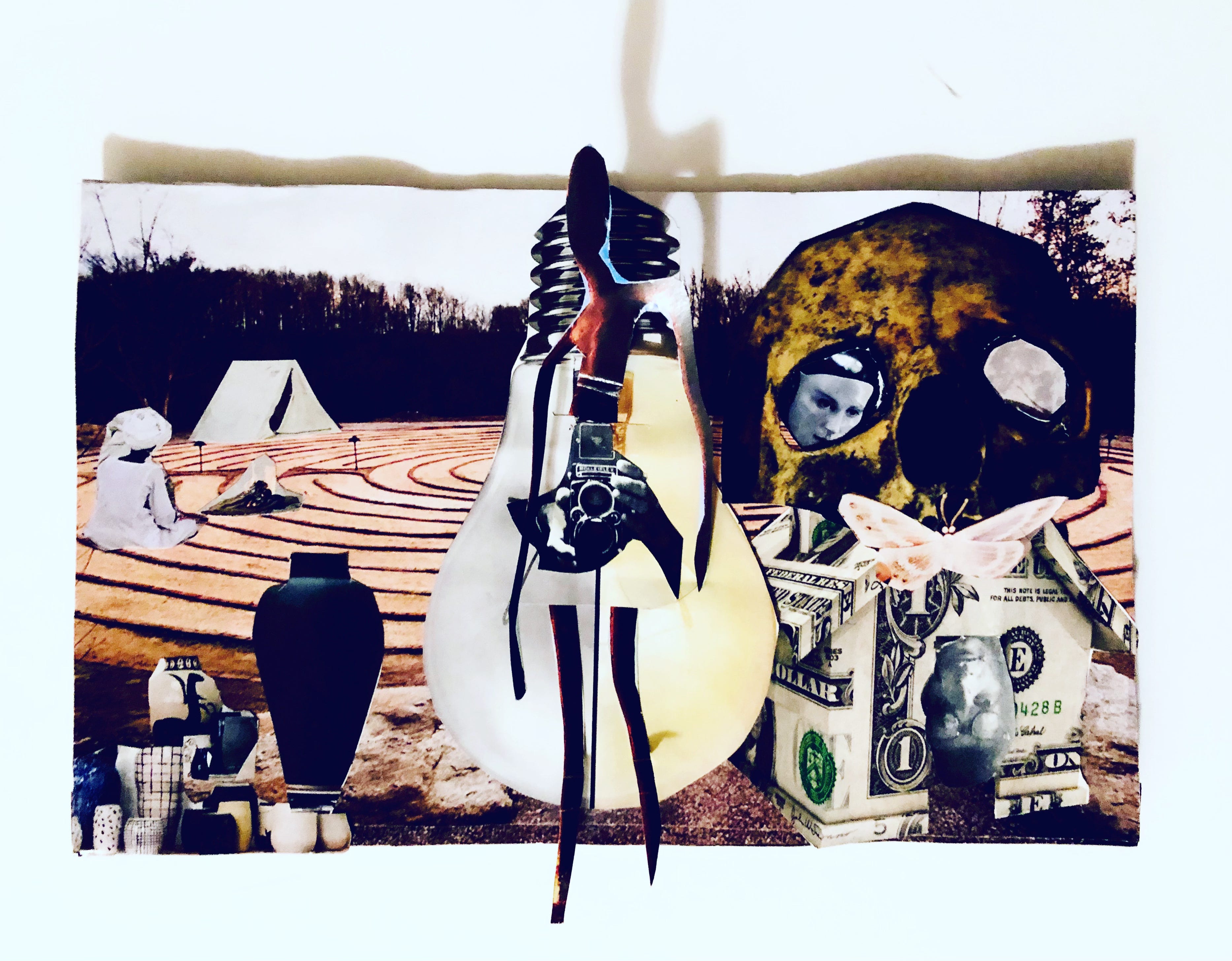
We ordered sharing platters, and as I passed Bill the aloo gobi, I asked: “How can I earn passive income?”
“You could design an app,” Bill said. “My nephew did.”
“What kind of app?”
“His is pretty straightforward. A grocery list app. It’s called Our Groceries.”
“These papadums are excellent,” said my mother.
“But what’s the difference between that and the Notes app on my iPhone?” I asked.
“It’s shareable.”
“Notes is shareable.”
“Yes, but you can upload photos, and this app synchronizes across all your devices. Works on iPhone and Android. It’s also free.” He pulled out his phone and showed me his live grocery list.
“Then how does it make money?”
“Over a million downloads,” Bill said, tearing apart some naan. “And see that banner ad across the top? Earns six figures in passive income a year.”
I almost choked on my supper.
My mother reached for another papadum.
Walking home from dinner, the sky still light, EDM in my AirPods, my brain was ablaze. Could I design an app? It would have to be useful. Simple. The nephew’s app is both — a grocery list, nothing more. Elegantly, maddeningly simple.
I must confess my brain just doesn’t work that way. What it generated was more poem titles. More story ideas.
Not a grocery app.
But the passive income question haunted me.
In 2021, I left a stable full-time salary to pursue a creative, independent life. Not the easiest path. But for my soul, the only one.
I was an EA for high-net-worth individuals — well paid, but with a salary that had a glass ceiling. I made someone’s coffee. I sat in the middle of an open room, fielding emails, phone calls, and task drops — until I mastered the workflow and finished by noon. A nervous system with nothing to do is not a resting nervous system. It’s a Ferrari quietly rusting in a garage.
I negotiated. When my work was done, I got to write.
This essay began at tax time. Entering contractor income into spreadsheets, I realized I was grossing roughly the same as my full-time salary — but paying both sides of CPP, no benefits, no paid vacation. The trade-off for flexibility to write. I chose it. I’d choose it again.
What I didn't predict was that managing my own taxes and tracking expenses would put me right back in the spreadsheet — or that everything in it would cost so much more.
A typical trip to the grocery store went from $40 to an average of $75. My gym membership — all-in pre-pandemic at YYoga — was $105 a month and included everything: Spin, Pilates, TRX, Yoga, HIT. Now I pay $289 a month across two studios. For half the classes.
Weight training isn’t vanity. For women over 50, it’s bone density, cognitive function, and mood regulation. Those classes are my community. The place where I am not alone with my thoughts and my screen.
My salary hasn’t gone up 175%. Likely, neither has yours.
A recent Substack post by Derek Thompson gave language to what I'd been living — a sharp, historically unprecedented decline in self-reported happiness across English-speaking nations since 2020. Canada included. Three culprits: individualism, expanded psychiatric diagnoses, and a news ecosystem engineered for negativity. Inflation tripled its historical rate in five years.
Much is made of the struggles of millennials and Gen Z, but there is a generation in between — old enough to have missed the equity boom, young enough to have missed the pension. We’re not in the headlines. We’re in the spreadsheet.
The awareness of standing on a trapdoor — the floor about to drop out, no job security, the growing divide between those amassing wealth without consequence and those of us just trying to stay solvent — generates a fair amount of anxiety. Just read Noah Hawley’s Atlantic essay on what he witnessed at Jeff Bezos’s private retreat.
I went looking for help — to address the anxiety and make enough room for the writing to come through.
My research led me to a therapist nearby who practises EMDR and DBR — one for the memories, one for the nervous system. After the first session, she asked a question I wasn’t expecting.
“Do you think you have ADHD?”
“Um…probably?”
There’s a reason Animal from the Muppets is my favourite.
Still, her question caught me off guard. But I agreed to a test, and you know what they say about curiosity. The process of answering the questions set off an internal alarm that threatened to undo the very anxiety I was there to quell.
When a mind wired for novelty encounters a theory about itself, it doesn’t simply accept it. It researches it exhaustively. Seven books on ADHD, three on neurodivergence and numerous podcasts aren’t denial. It’s due diligence. It’s hyper-focus meeting a subject it can’t put down, and it’s what critical thinkers do. But the more I learned, the more I felt like I was looking in a very large mirror under fluorescent light.
The evidence was hard to argue with.
Dyscalculia — I grossly overestimated the cost of a family trip and nearly cancelled the whole thing until I discovered I'd used the wrong calculation in Excel. I don't do math. The math does me. Dysgraphia — my handwriting is its own kind of code. I once held up a multimillion-dollar distribution because the bank couldn't read my fives on the EFT paperwork. Impulsivity — why else would I buy a ridiculously expensive knit sweater with the words ‘OUT THERE’ on the back? People-pleasing — I write about this consistently, which is its own kind of irony. Rumination — don’t get me started.
Toxic Perfectionism — writers talk about the shitty first draft. How about fifty?
Could ADHD explain my entire existence? The jobs I mastered and left. The relationships that couldn’t contain me. Moving 21 times in 30 years. The constant, restless searching for the next interesting thing.
Knowing it's real makes my experience real. I have a clearer lens now — on the spreadsheet, on the invisible assailants, on all of it. ADHD was never the problem.
A former partner exasperatedly explained to our couples counsellor that I never listened to him. His evidence: “I asked her what her favourite colour was, and she said cars. Can you believe that?”
Cars.
His face: incensed. The therapist: bemused. Me: thinking yes, that sounds about right — and also, how poetic.
The ADHD brain doesn’t answer the question asked. It answers the question underneath it. Colour isn’t a category — it’s a feeling. And cars have colours. And suddenly you’re three tangents deep, and the room thinks you weren’t listening.
As it turns out, this is also how I write.
Which leads me back to the radio tower.
I’m happiest when I’m receiving information and writing. Inbox. Outbox. Writing is a form of self-understanding — tuning in to the music of the muse. When I’m writing, I’m not thinking about how much money I’m going to make or how many likes I might get. I’m thinking about how I can help people make sense of the world — the way other writers have helped me.
It’s not just poems. It's this — collecting, pattern-finding, and feeling the data in the body before the words arrive. Sharing with fellow seekers. No paywall. No banner ad. Pure expression.
Writing is where I am whole.
Aristotle called it eudaimonia — living according to your nature. The School of Life puts it this way:
(Eudaimonia) encourages us to trust that life's most worthwhile projects will at points be quite at odds with contentment and yet worth pursuing, nevertheless.
The world was not built for minds like mine. The school system, the open-plan office, the nine-to-five, the spreadsheets — all of it designed for a nervous system I don’t have. The difference is I’ve stopped trying to fit into a little box. I write (and make art) instead.
📚 Further Exploration
📖 It All Makes Sense Now: Embrace Your ADHD Brain to Live a Creative and Colorful Life — Meredith Carder. My favourite book on ADHD of the seven I’ve read so far. Practical, actionable, no medication agenda.
📖 ADHD for Smart Ass Women — Tracy Otsuka. Made me LOL. The first book that named dyscalculia and dysgraphia in the same breath. Suddenly, my cheque-writing PTSD had a clinical explanation.
📖 A Radical Guide for Women with ADHD — Sari Solden. A foundational voice in ADHD literature for women.
📖 Divergent Mind: Thriving in a World That Wasn’t Designed for You— Jenara Nerenberg. Covers the whole spectrum of Neurodivergence.
🎧 Armchair Expert — Sasha Hamdani: ‘Too Sensitive: Rejection, Resilience and the Science of Feeling Deeply’. Funny and informative. I like my news through a funnel of comedy.
🔗 Feng Shui Sleeping Directions — your optimal sleep direction is determined by your Kua number — a personal calculation based on birth year and gender. Mine is 2 — Tien Yi (天医), the Heavenly Doctor. Might explain the radio tower.
🎵 “Skin” by YOTTO & Laudic — EDM is technically medicine for ADHD brains like mine. If you’re tired of blending in, this track is for you!
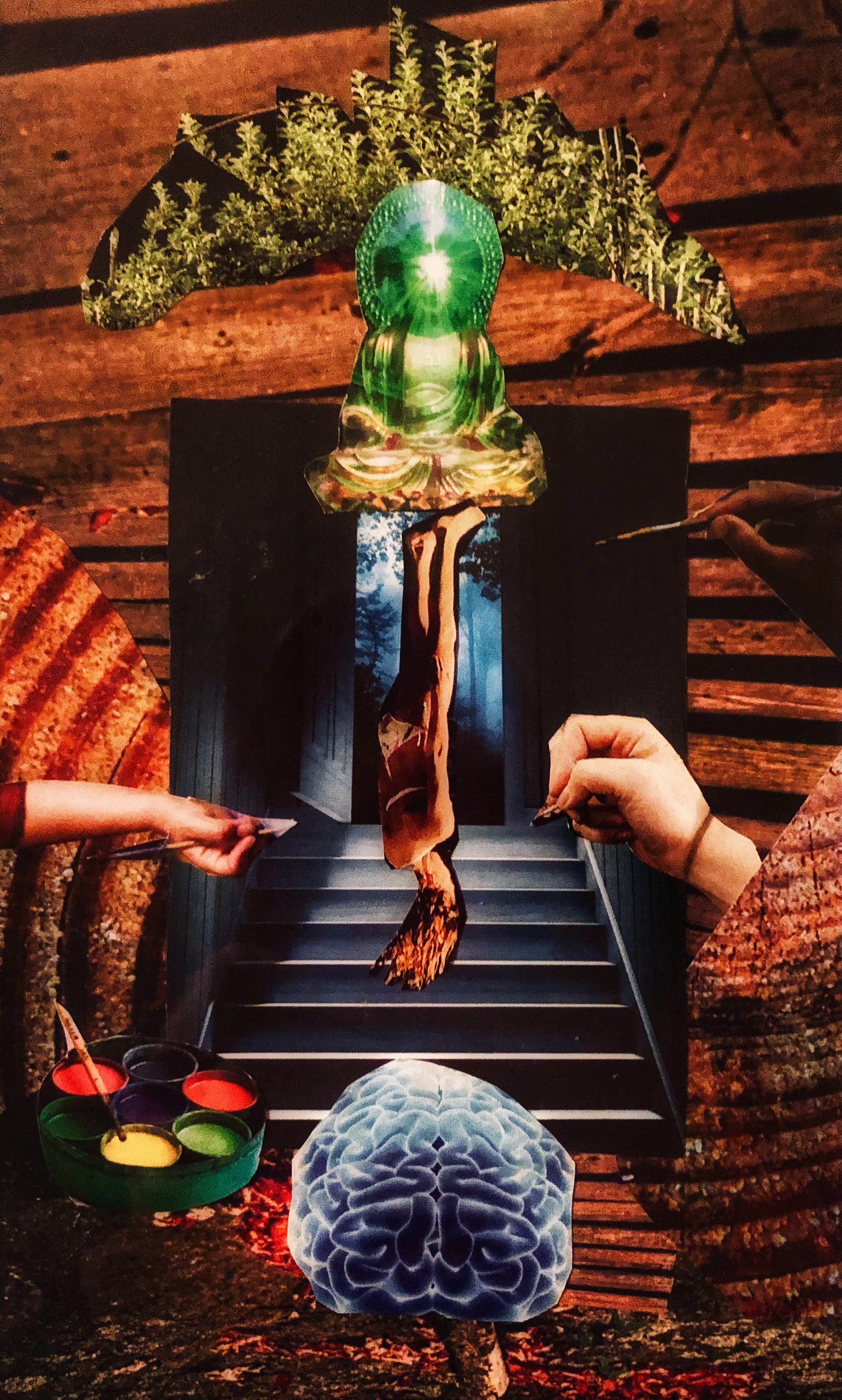
🎨 Collages by Miss JJ
💡 Not everyone can afford paywalls. Get free access to The Atlantic, NY Times, The Globe and Mail and more with your local library card.
Really enjoyed this Jennifer
So much resonated. Cars.